
Opening your refrigerator only to find crowded shelves, forgotten leftovers, and containers stacked on top of one another can make everyday kitchen routines feel more difficult than they need to be. A little organization can make a surprisingly big difference, helping you see what you have, find ingredients faster, and make better use of the available space.
Fridge organization ideas can help you make better use of every shelf, keep everyday ingredients easy to find, and create a refrigerator that is easier to maintain.
Whether you have a spacious French-door refrigerator or a small apartment fridge, the right storage solutions can help create a cleaner and more functional setup. From clear refrigerator organizer bins and stackable containers to dedicated snack sections and simple weekly reset routines, there are plenty of ways to make your refrigerator work better for your household.
These 20 fridge organization ideas combine practical storage tips with attractive styling inspiration. You do not need to purchase everything at once. Start with the areas that cause the most clutter and build an organization system that is easy to maintain.
Quick Tips Before Trying These Fridge Organization Ideas
Before adding organizers or moving food around, take a few minutes to prepare your refrigerator. A little planning will help you avoid buying containers that do not fit or creating a system that is difficult to maintain.
- Measure your shelves: Check the width, depth, and available height before purchasing bins or containers.
- Remove expired food: Check dates and discard food that is spoiled or no longer safe to eat.
- Clean the shelves: Wipe spills and crumbs before putting everything back.
- Group similar items: Keep drinks, snacks, condiments, and meal-prep ingredients in designated areas.
- Leave room for airflow: Avoid packing the refrigerator so tightly that cold air cannot circulate.
- Check the temperature: Keep your refrigerator at 40°F (4°C) or below.
1. Use Clear Refrigerator Organizer Bins
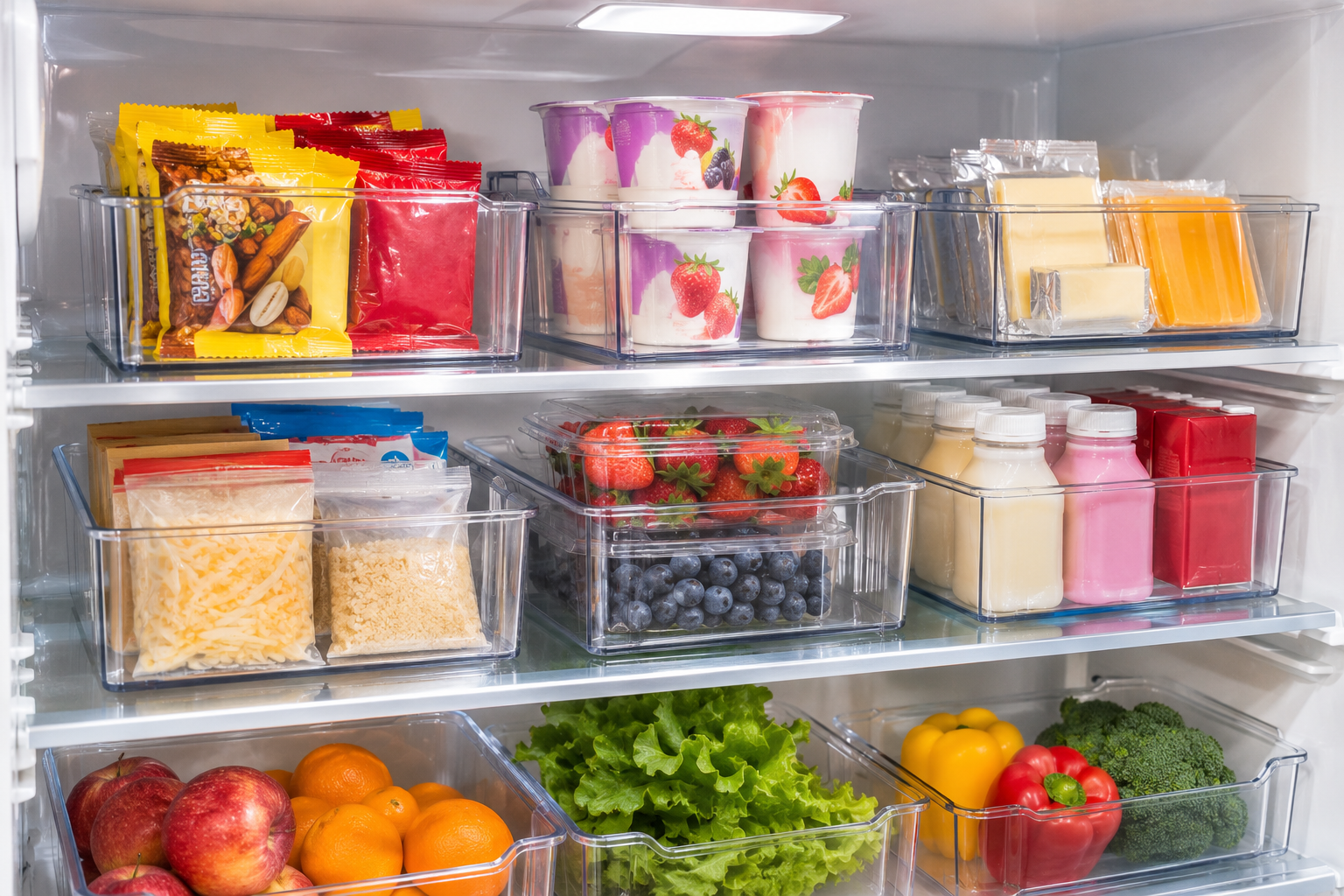
One of the easiest ways to organize a refrigerator is to use clear storage bins. Instead of having food scattered across different shelves, group similar items together in separate containers. You can dedicate one bin to snacks, another to breakfast ingredients, and another to packaged foods.
Transparent organizers are especially useful because you can see what is inside without pulling every container out. They also make it easier to remove a whole group of items when cleaning or preparing meals.
Choose refrigerator-safe bins that fit your shelf dimensions. Avoid overfilling them, and do not use storage bins in a way that blocks the refrigerator’s air vents.
Fridge organization ideas using clear storage bins make it easier to see what you have and prevent ingredients from getting forgotten.
Shop refrigerator organizer bins on Amazon →
2. Store Leftovers in Matching Food Containers
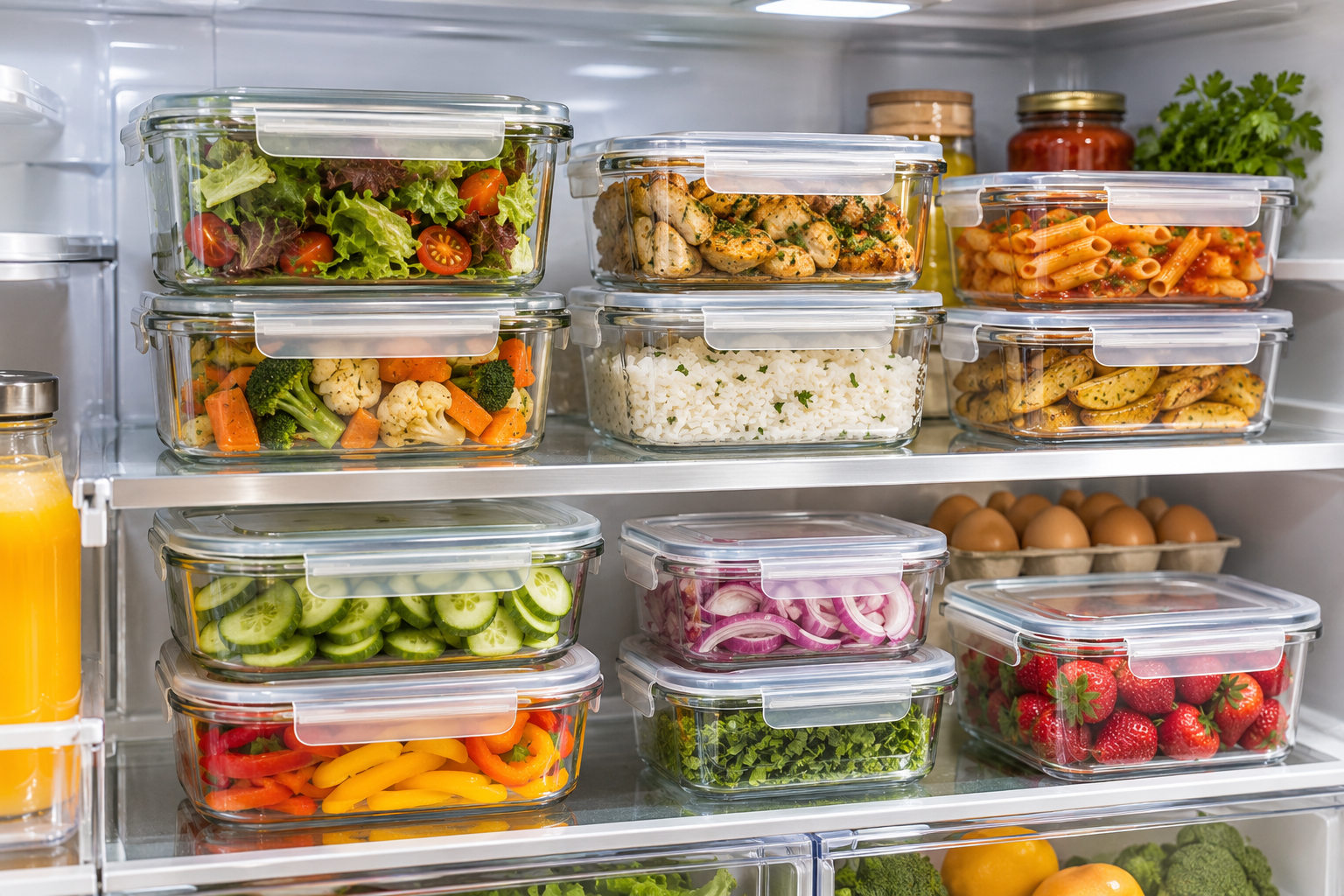
Leftover food can quickly make refrigerator shelves look cluttered, especially when stored in mismatched bowls and containers. A collection of matching food storage containers creates a more organized appearance and makes it easier to stack items neatly.
Glass containers are a popular choice because they are easy to clean and do not retain food odors as readily as some plastics. Choose containers with secure, compatible lids and different sizes for individual portions, side dishes, and larger meals.
Transfer leftovers into shallow containers when appropriate, refrigerate them promptly, and label them with the date. Remember that attractive storage should never replace safe food handling.
These fridge organization ideas also help keep prepared foods neatly arranged while making better use of limited shelf space.
Shop glass food storage containers on Amazon →
3. Add a Lazy Susan for Condiments

Small jars and condiment bottles can easily disappear behind larger containers. A refrigerator-safe lazy Susan helps solve this problem by allowing you to rotate the organizer instead of moving several items just to reach one bottle.
Use it for suitable condiments, spreads, and smaller jars. A compact turntable works especially well on a shelf where you frequently store similar items.
Before purchasing one, measure the shelf and check that the turntable has enough clearance to rotate without hitting the refrigerator walls or nearby containers.
Shop refrigerator lazy Susans on Amazon →
4. Install a Drink and Can Organizer

If your refrigerator regularly fills up with soda cans, sparkling water, or other canned beverages, a can organizer can make a noticeable difference. These organizers keep drinks in a designated area and help prevent loose cans from rolling around.
Choose a dispenser that fits the size and number of cans you usually keep chilled. Some designs use a gravity-fed system, while others are simple stackable holders.
Keep heavier beverage containers stable and avoid stacking them where they could fall when the refrigerator door opens.
Shop refrigerator can organizers on Amazon →
5. Create a Dedicated Fruit Section

Instead of placing fruit wherever there happens to be room, create a dedicated area for the varieties that need refrigeration. Grouping similar items together makes it easier to see what you have and encourages you to use ingredients before they spoil.
Clear containers can help keep smaller fruits organized, while shallow bins make it easier to see everything at a glance. Choose storage methods that suit each type of fruit, since some varieties need different temperature, moisture, or ventilation conditions.
Keep fruits that produce ethylene gas separate from ethylene-sensitive produce when appropriate, and avoid overcrowding containers.
Shop fruit storage containers on Amazon →
6. Organize Vegetables with Produce Containers
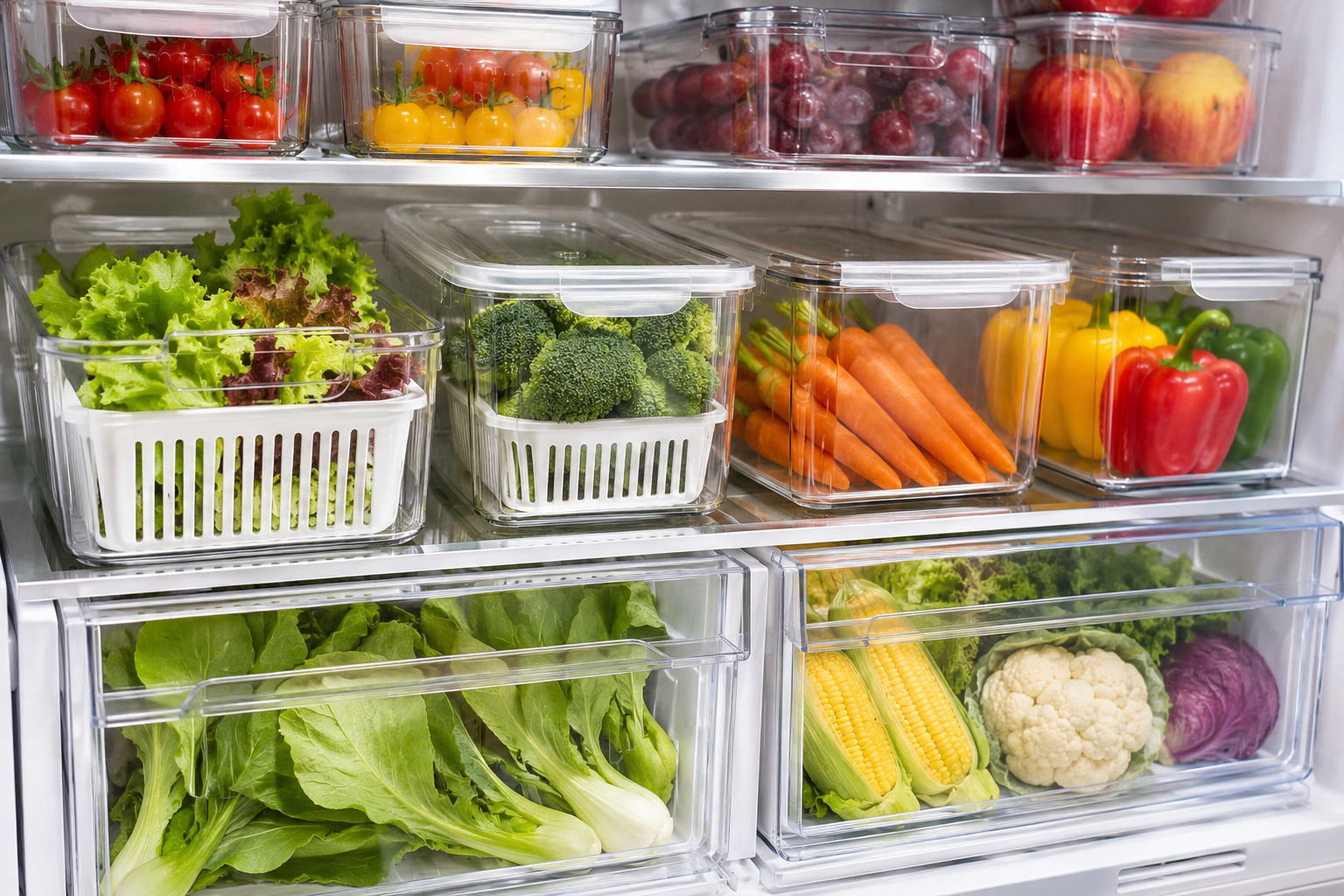
Vegetables can take up a surprising amount of refrigerator space, especially when stored in several open bags. Produce storage containers provide a more organized alternative and can help separate different ingredients.
Look for containers with removable baskets or adjustable ventilation features if you want more flexibility. Different vegetables have different storage requirements, so choose the appropriate moisture and airflow settings rather than using one method for everything.
For the best results, follow the storage guidance for each vegetable and dry produce thoroughly when washing it before storage.
Shop produce storage containers on Amazon →
7. Use a Dedicated Egg Holder

Egg cartons can be bulky or difficult to arrange neatly, particularly when you have several food containers on the same shelf. A dedicated egg holder offers a more compact way to keep eggs together.
Choose a holder with individual spaces that help prevent eggs from rolling around. Some designs have lids, stackable trays, or pull-out drawers that fit neatly on refrigerator shelves.
Keep eggs refrigerated in their original carton or a suitable covered container, preferably on an interior shelf rather than the refrigerator door, where temperatures fluctuate more.
Shop refrigerator egg organizers on Amazon →
8. Create a Deli and Cheese Station
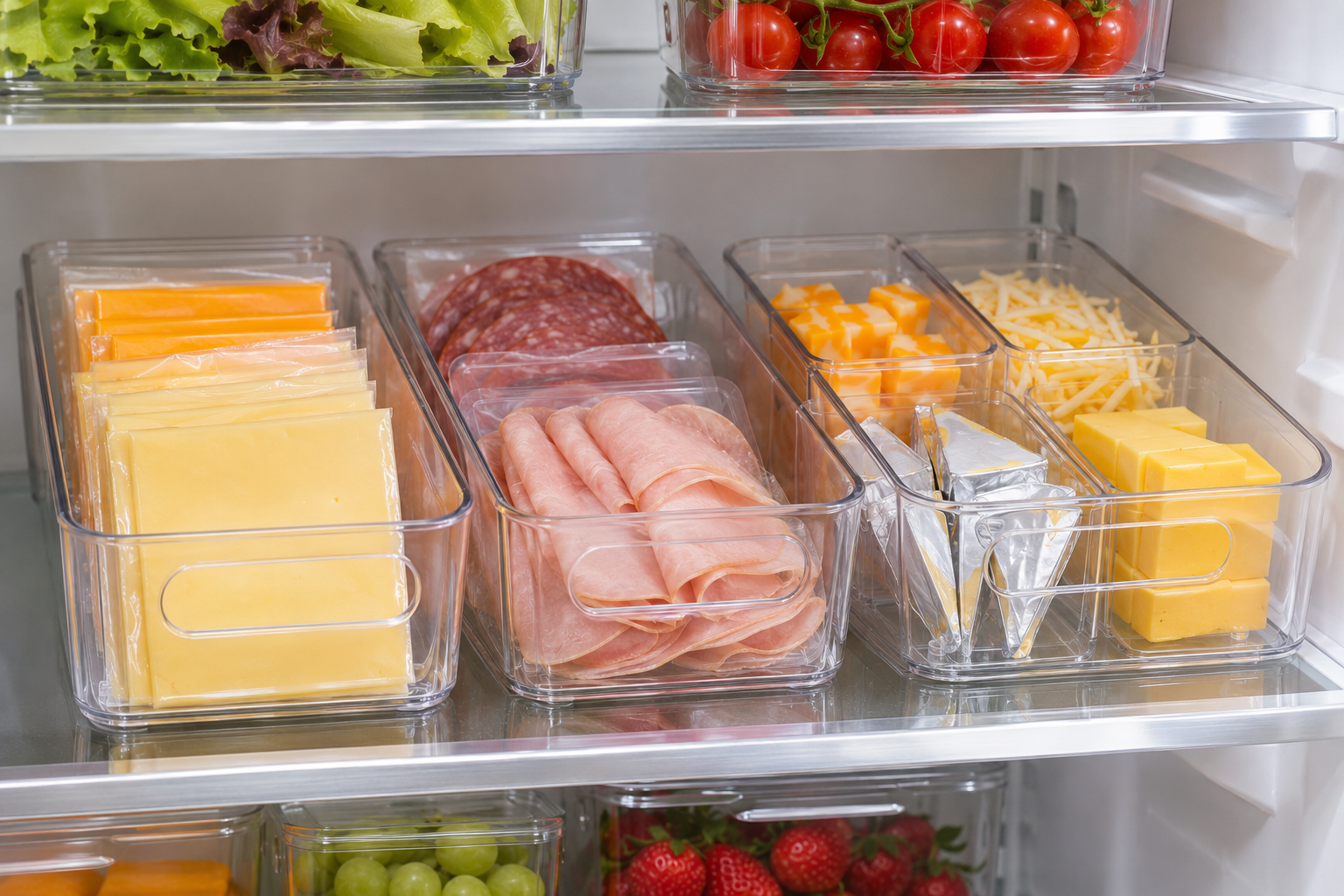
Cheese, deli meats, and other frequently used refrigerated foods can easily become scattered across different shelves. Create a dedicated section for these items so you can find everything when making sandwiches, snacks, or quick meals.
Use shallow food-safe containers or suitable storage boxes to group packaged products. Keep food in its original packaging when that packaging provides the necessary protection, and follow the storage instructions on the label.
This simple arrangement also makes it easier to check what needs to be used soon.
Shop deli storage containers on Amazon →
9. Make a Grab-and-Go Snack Zone

A designated snack section is especially helpful for busy households. Instead of searching through multiple shelves, family members can find suitable ready-to-eat foods in one convenient location.
Use a clear bin for individually packaged refrigerated snacks, yogurt cups, or other suitable items. Keep foods that need refrigeration cold and make sure children can safely reach only the items intended for them.
You can also use a small label to identify the section and make it easier for everyone to return items to the correct place.
Simple fridge organization ideas for snacks and drinks can make everyday meals and quick refreshments easier to access.
Shop handled refrigerator bins on Amazon →
10. Set Up a Breakfast Section

If mornings are usually busy, setting aside a small refrigerator section for breakfast ingredients can save time. Group items such as yogurt, suitable milk products, and prepared breakfast components in one area.
A shallow organizer bin can make the section easier to maintain. You can also arrange frequently used items toward the front so they are easy to see and access.
Keep temperature-sensitive foods properly refrigerated and follow the storage directions on their packaging.
Shop refrigerator organizer trays on Amazon →
11. Maximize Vertical Space with Stackable Bins
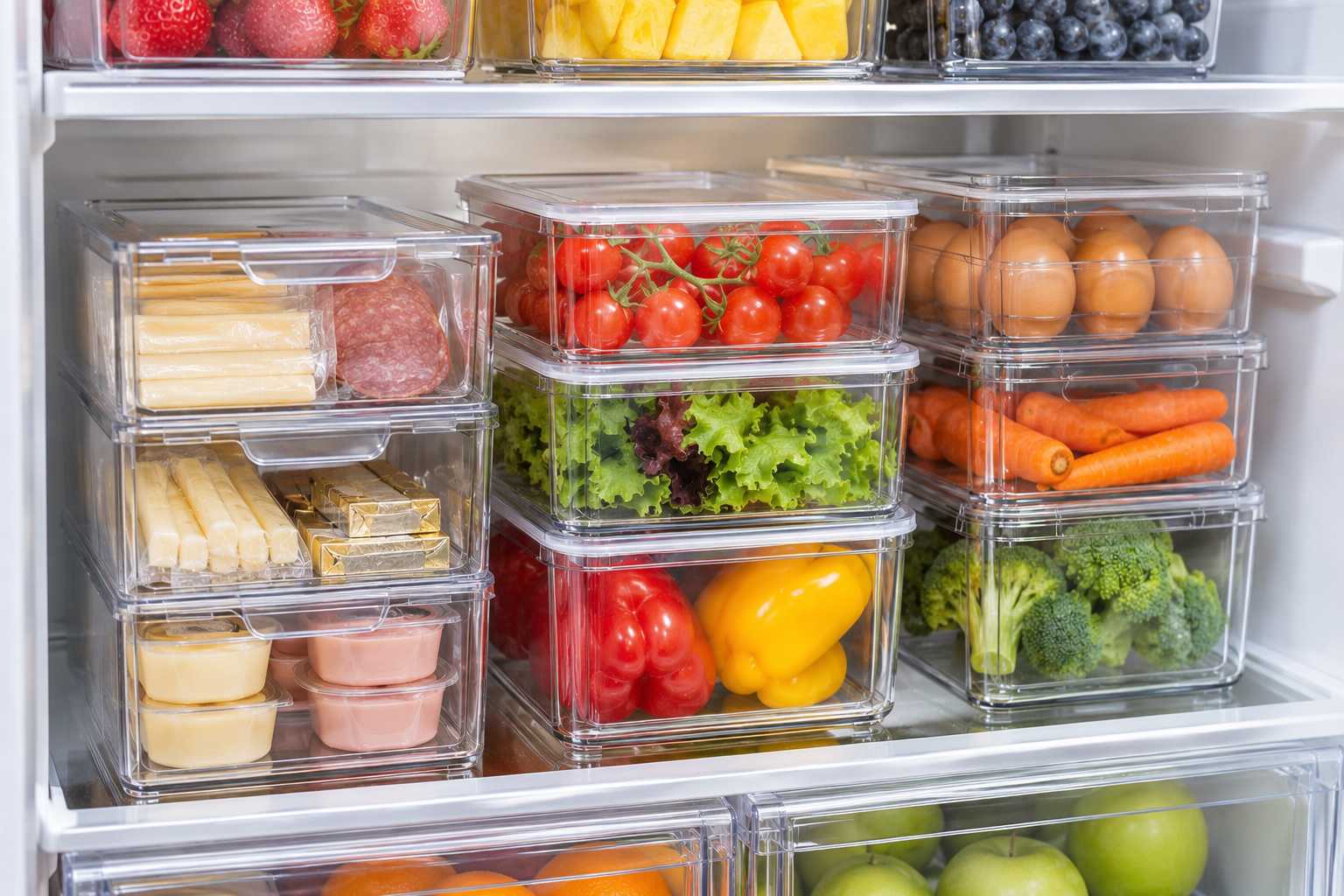
When refrigerator shelves have extra vertical space, stackable containers can help you use it more efficiently. Instead of leaving large empty gaps above shorter food packages, choose organizers that fit the available height.
Look for sturdy containers designed to stack securely. Clear pull-out drawers can also make it easier to reach items stored farther back.
Always check that stacked containers remain stable and do not obstruct vents, shelves, or the refrigerator door.
Shop stackable refrigerator organizers on Amazon →
12. Organize the Refrigerator Door Shelves

The refrigerator door is useful for organizing smaller bottles, sauces, and condiments that are designed to be stored there. Grouping similar items together prevents the shelves from becoming a collection of scattered bottles.
You can arrange sauces on one shelf, spreads on another, and frequently used condiments in an easy-to-reach section. Small door organizers may also help keep bottles upright.
Remember that the door is generally one of the warmest parts of the refrigerator. Store milk, eggs, meat, and other highly perishable foods in colder interior areas instead.
Shop refrigerator door organizers on Amazon →
13. Label Your Refrigerator Containers

Labels may seem like a small detail, but they can make a big difference when several people share the same refrigerator. Clearly marked bins help everyone understand where items belong.
Use simple labels such as Snacks, Breakfast, Produce, and Leftovers. For prepared foods, add the preparation or storage date when appropriate so you can keep track of how long they have been stored.
Choose removable labels or food-safe labeling materials that are easy to clean and update.
Shop kitchen organization labels on Amazon →
14. Create a Meal Prep Zone
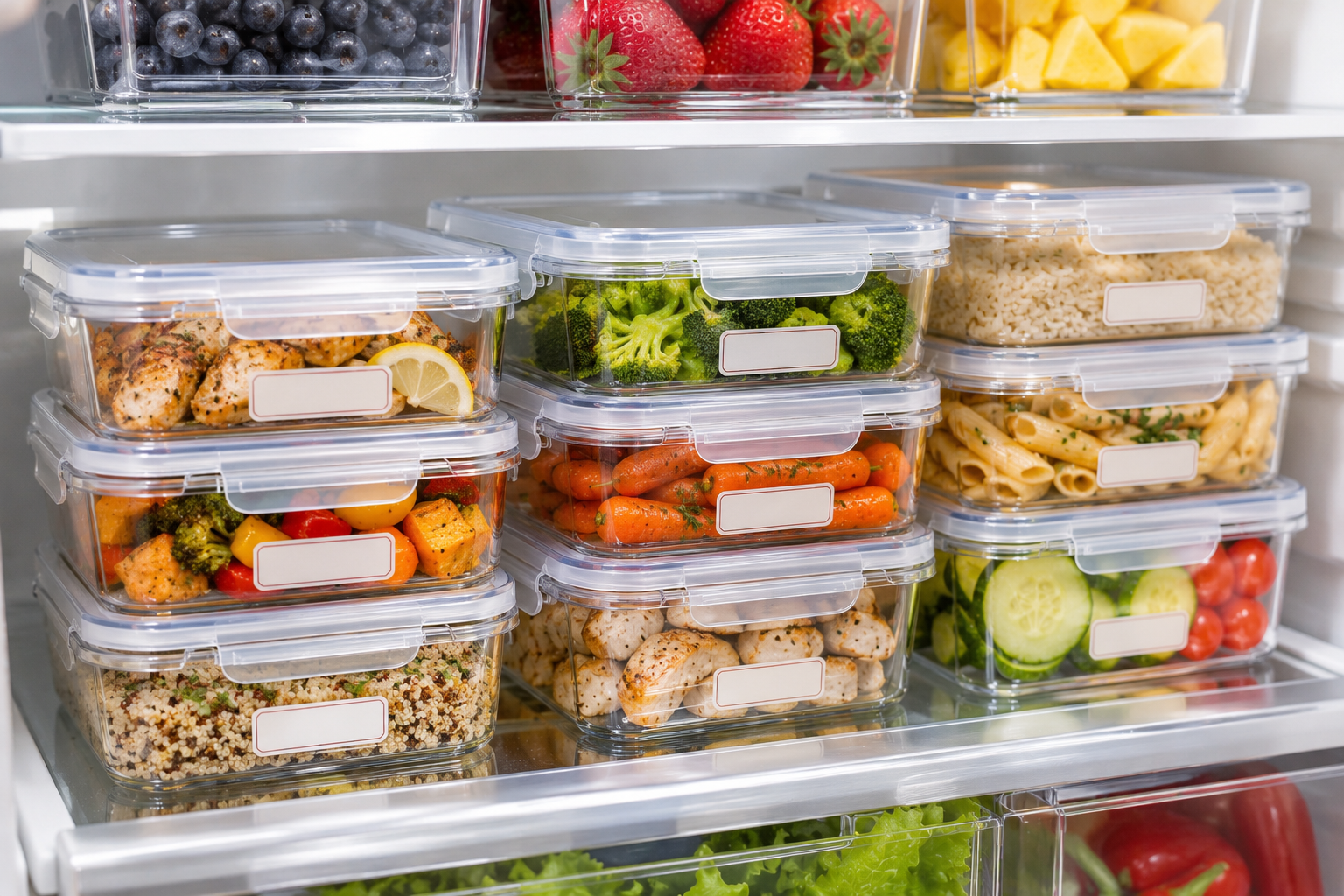
If you prepare meals ahead of time, reserve a section of your refrigerator for properly stored prepared dishes. Matching containers make it easier to stack portions and see what is available throughout the week.
Use shallow, food-safe containers where suitable, and label them with the food name and preparation date. Arrange older items toward the front so they are easier to notice and use first.
Refrigerate perishable food promptly after preparation. Do not leave meals at room temperature for extended periods, and follow recommended food storage times.
Shop meal-prep containers on Amazon →
15. Organize a Small Refrigerator
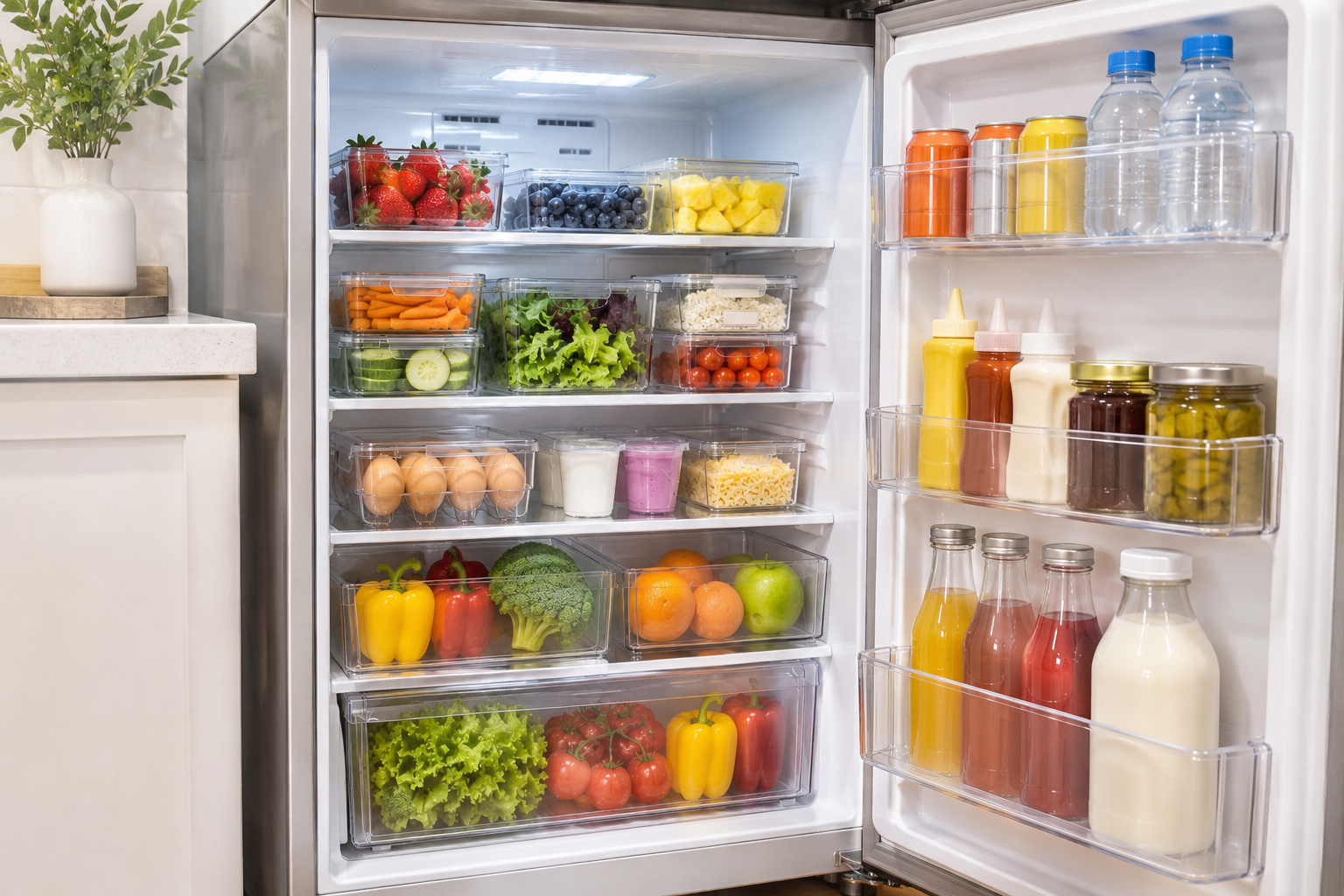
A small refrigerator can be challenging to organize because every shelf has limited space. The key is to choose compact storage solutions rather than filling the refrigerator with oversized organizers.
Use narrow bins for small packages, stackable containers for leftovers, and a rotating organizer for suitable jars. Group similar foods together and remove unnecessary packaging when it is safe and practical to do so.
Measure each shelf before purchasing accessories. A few well-fitting organizers are usually more useful than a large collection of containers that leave little room for food.
Shop slim refrigerator organizers on Amazon →
16. Create a Beverage Station
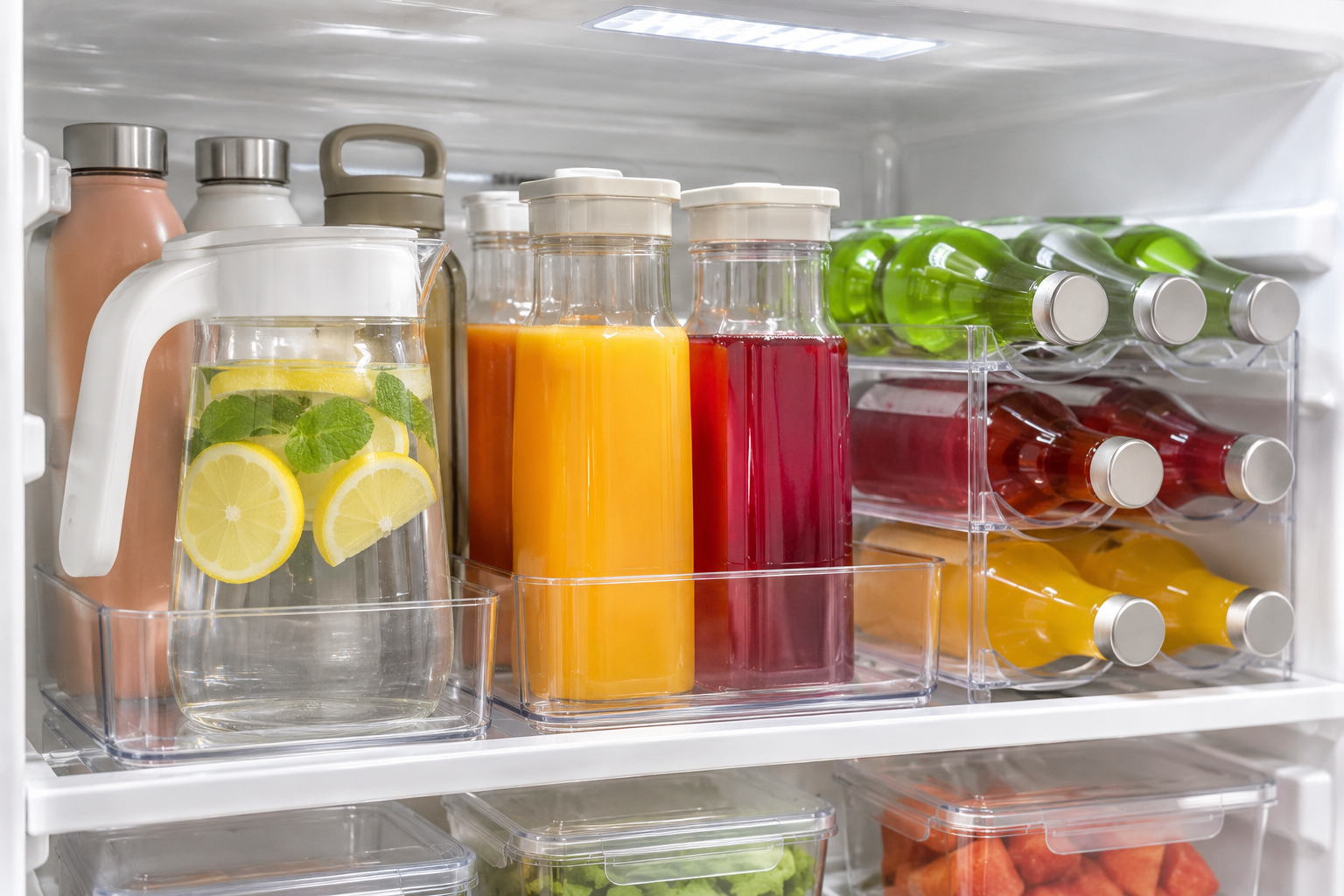
If your refrigerator is frequently filled with water bottles, juice containers, or other drinks, give beverages their own designated area. Keeping them together can free up space on other shelves for food and ingredients.
Use a bottle organizer or a suitable storage bin to keep drinks from rolling around. For larger pitchers and bottles, check the available height before arranging them.
Keep drinks properly sealed and follow their refrigeration instructions after opening.
Shop refrigerator bottle organizers on Amazon →
17. Make Use of the Refrigerator Drawers
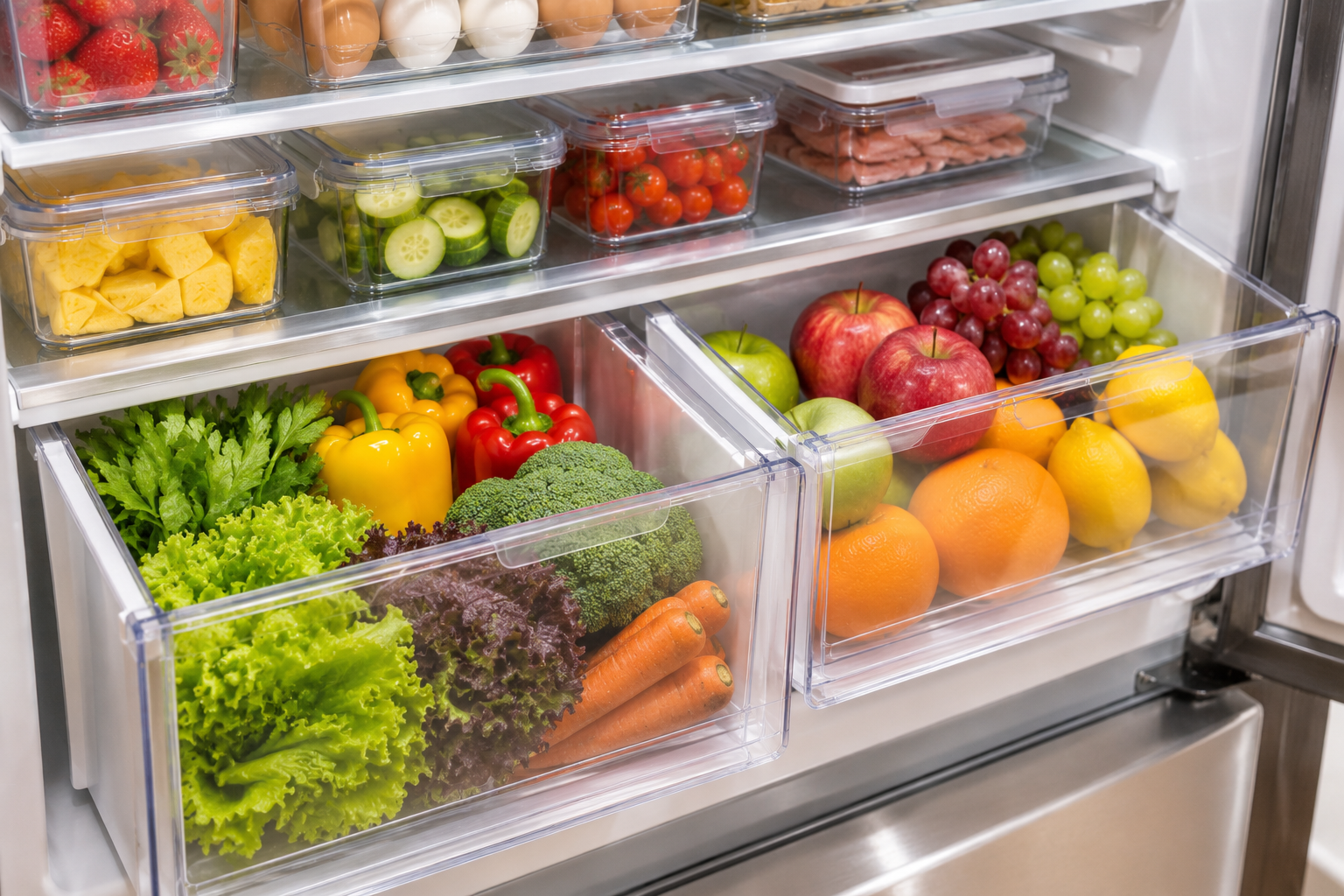
Refrigerator drawers are often underused or filled without a clear system. Take advantage of their intended purpose by following the settings and recommendations provided by your refrigerator manufacturer.
Many refrigerators have humidity-controlled crisper drawers designed for certain types of produce. Other models have dedicated deli or temperature-controlled compartments.
Rather than treating every drawer the same, organize them according to their design. This makes the storage system more practical and helps you use the features already included with your appliance.
These fridge organization ideas make it easier to separate produce, snacks, and everyday ingredients while keeping everything within reach.
18. Create an Eat-First Food Bin
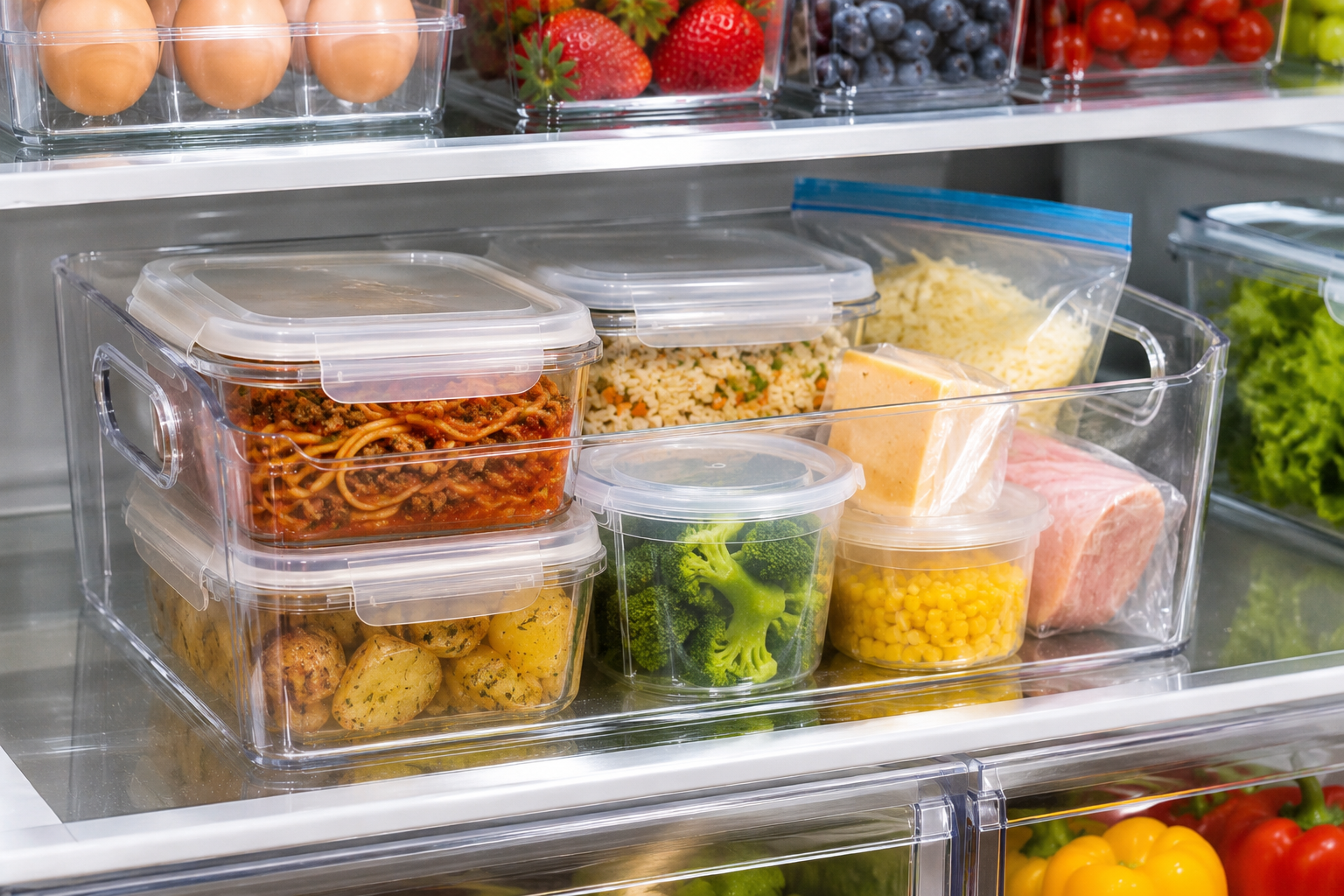
One common reason food gets wasted is that it becomes hidden behind newer groceries. An eat-first bin gives items that need attention a visible place in your refrigerator.
Use it for suitable leftovers, opened packages, and ingredients that should be used soon. Add a small label so everyone knows to check this section before opening something new.
Remember that the bin is only an organizational tool. It does not extend the safe storage life of food. Check dates, follow storage instructions, and discard anything that may be unsafe.
Shop refrigerator storage bins on Amazon →
19. Keep a Simple Weekly Fridge Reset Routine
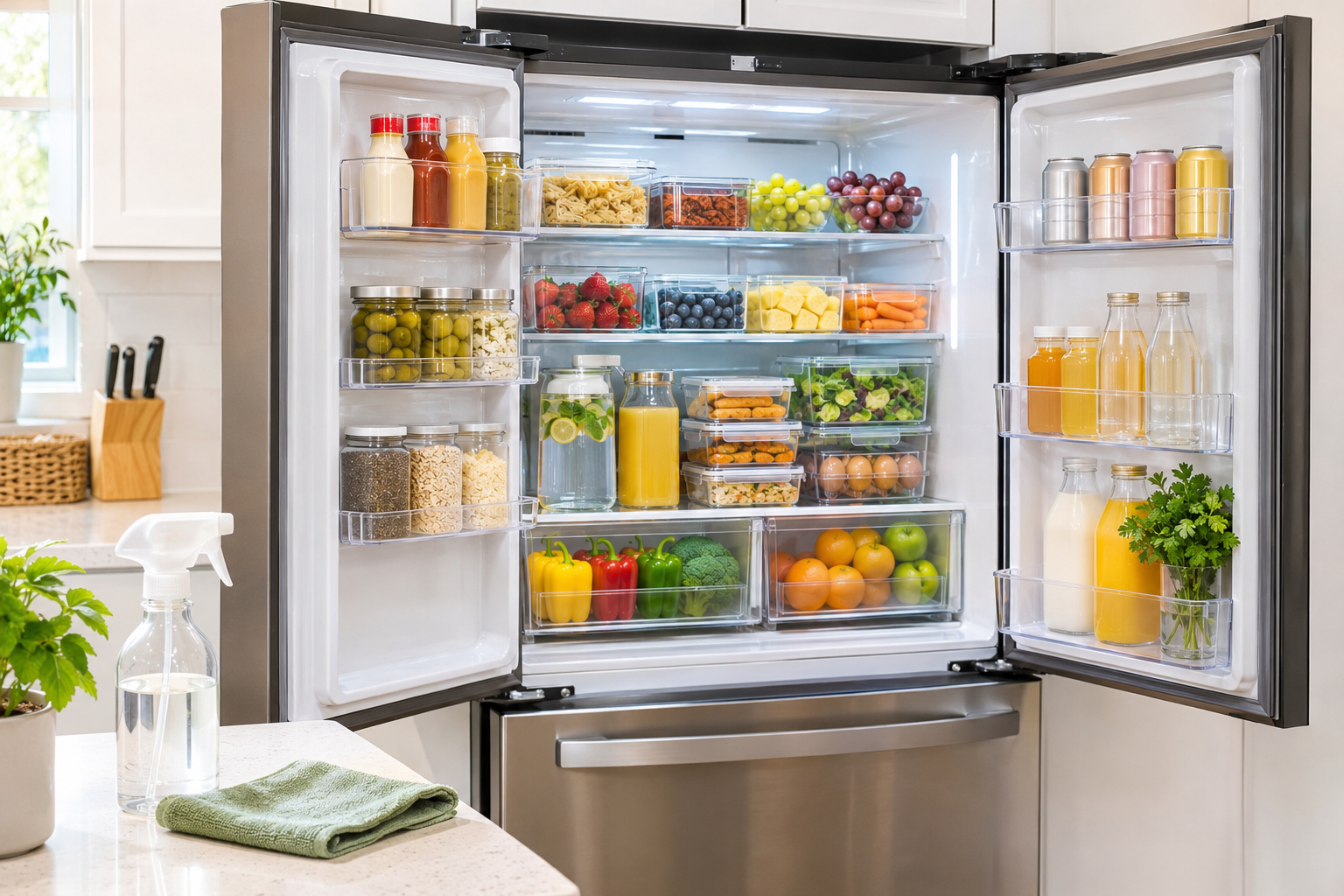
Even the most beautiful refrigerator organization system will eventually become cluttered without a little maintenance. A short weekly reset can help you keep everything in order without having to reorganize the entire refrigerator each time.
Choose a regular day to check leftovers, review food dates, wipe up spills, and return misplaced items to their designated sections. Make a quick list of ingredients that need to be used soon before planning your next grocery trip.
You can also check that containers are clean, lids are secure, and the refrigerator is not overcrowded.
- Check leftovers and opened packages.
- Remove spoiled or expired food.
- Wipe visible spills and clean dirty containers.
- Move older suitable items toward the front.
- Check that food is stored at a safe temperature.
- Make a list of ingredients to use soon.
20. Create a Beautiful Fridge Organization System

Once you have established practical storage zones, bring everything together with a consistent look. You do not need to make every item match, but choosing a few complementary storage accessories can create a cleaner and more cohesive appearance.
Clear bins, matching glass containers, simple labels, and neatly arranged ingredients are an easy combination. Keep frequently used items accessible and leave enough space for proper air circulation.
Most importantly, choose an organization system that fits your household’s everyday routine. A refrigerator should be easy to use, not just beautiful to photograph.
Shop refrigerator organization sets on Amazon →
Common Refrigerator Organization Mistakes to Avoid
Organizing your refrigerator is not only about making everything look neat. Some common storage habits can make food harder to find or interfere with safe storage.
- Overcrowding shelves: Leave enough room for cold air to circulate.
- Storing everything in containers: Use storage accessories where they genuinely improve organization, not simply to fill space.
- Ignoring temperature: Keep the refrigerator at 40°F (4°C) or below and use an appliance thermometer if needed.
- Keeping raw meat above ready-to-eat food: Store raw meat, poultry, and seafood in leak-proof containers on a lower shelf to prevent drips from contaminating other foods.
- Using the door for highly perishable foods: The refrigerator door experiences more temperature fluctuation than the interior shelves.
- Forgetting leftovers: Label prepared food and follow recommended storage times.
- Buying organizers before measuring: Check shelf dimensions and clearances before purchasing accessories.
Frequently Asked Questions About Fridge Organization
1. How do I organize my refrigerator properly?
Start by removing expired food, cleaning the shelves, and grouping similar items together. Create designated areas for produce, beverages, leftovers, snacks, and condiments. Store foods according to their temperature and food-safety requirements, and avoid blocking airflow.
2. What are the best containers for fridge organization?
Clear refrigerator-safe bins, stackable food containers, and glass storage containers are popular choices. The best option depends on what you plan to store, the available shelf space, and whether the container is suitable for food storage.
3. How can I organize a small refrigerator?
Use slim organizers, stackable containers, and compact bins that fit your shelves. Group similar items together, make use of suitable door storage, and avoid buying accessories that take up more room than the food they are meant to organize.
4. How do I make my fridge look aesthetic?
Choose a consistent collection of clear bins, matching food containers, and simple labels. Group similar ingredients together and keep the shelves tidy. A clean arrangement with enough open space can look attractive without sacrificing functionality.
5. What should go on each refrigerator shelf?
Follow your refrigerator manufacturer’s storage guidance. In general, keep ready-to-eat foods above raw meat, poultry, and seafood, which should be stored in leak-proof containers on a lower shelf. Use drawers according to their intended settings, and reserve door shelves for suitable condiments and less temperature-sensitive items.
6. How often should I clean and organize my fridge?
Check food regularly and clean spills as soon as they happen. A weekly review is a useful way to check leftovers, remove spoiled food, and return misplaced items. Follow food-safety guidance for cleaning and storage.
Final Thoughts
These fridge organization ideas can make everyday kitchen routines easier, reduce the time spent searching for ingredients, and help you keep track of the food you already have.
Important: Don’t add the phrase repeatedly just to increase the score. Natural writing and useful content matter more than reaching a particular Rank Math number.
Start with a few practical changes, such as adding clear organizer bins, grouping similar foods together, creating an eat-first section, and using stackable containers where they fit. Once you find a system that works for your household, maintaining an organized refrigerator becomes much simpler.
Whether you prefer a clean minimalist look or a fully organized refrigerator with dedicated sections, these fridge organization ideas can help you create a space that is both attractive and functional.
Save your favorite ideas and start with one small section at a time. A more organized kitchen can begin with something as simple as your refrigerator.
The best fridge organization ideas are the ones that fit your household’s routine, maximize available space, and are easy to maintain.